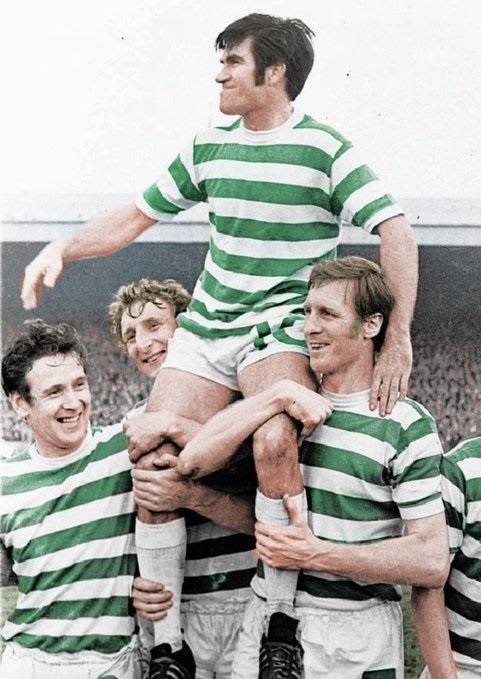
There is a moment that arrives in every dominant club’s lifecycle when comfort becomes complacency, when the applause for domestic success drowns out the alarms sounding from abroad. It should be familiar if you’re a Celtic fan; that moment has lasted two decades.
.png)
APATHY: DOMESTIC DOMINANCE, EUROPEAN IRRELEVANCE
Numbers tell one story. Since the 2005-06 season, Celtic have lifted the Scottish Premiership title 14 times. European qualification every season with some elements of the top table to delight. Quadruple Trebles. A balance sheet with cash reserves the envy of most much larger fish in a European context. The trophy cabinet overflows. The stadium is frequently sold out. So why the discontent?
Step back, take a breath, add some context and have a look at the map of European football’s light to middleweights—clubs from Norway’s Arctic Circle, from the Danish heartlands, from Belgium’s competitive cauldron—and a more uncomfortable truth emerges. Celtic have been culturally downsized. European ambitions, once embodied by a Lisbon final and latter‑day nights against Barcelona, Manchester United, Man City and Bayern Munich, have been recalibrated downward to a passive acceptance of participation over progress.
Celtic frankly are no longer structured for European growth. It’s arguable we never were. Meanwhile, the one point ahead of Rangers mentality has allowed the clubs competitors in comparable leagues to quietly build the machinery Celtic lack.
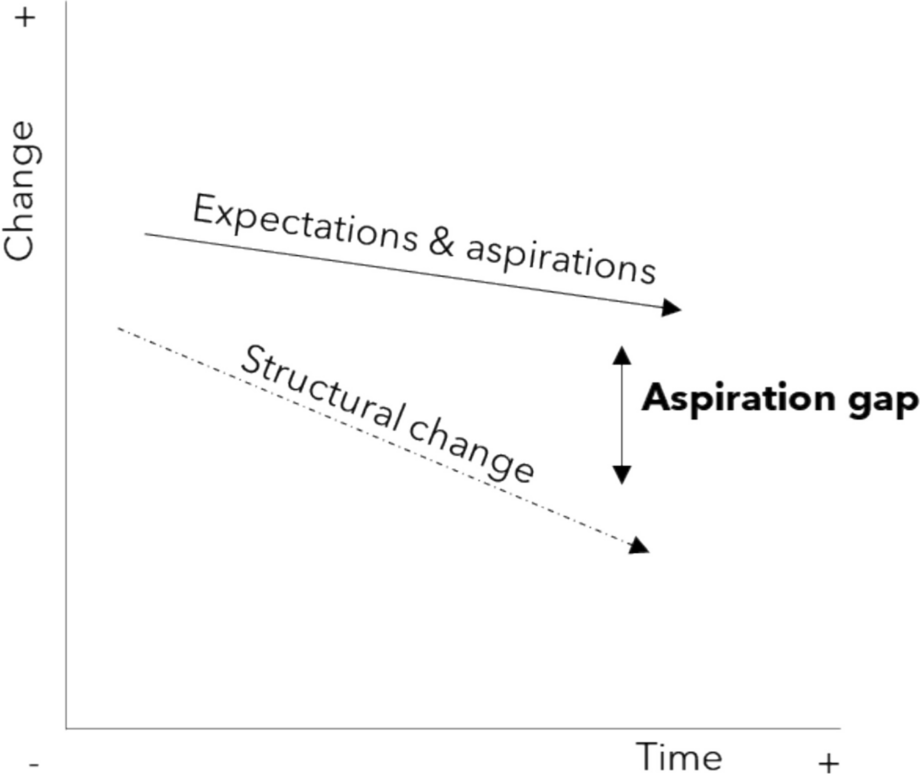
THE ASPIRATION GAP—WHEN PARTICIPATION REPLACES PROGRESS
Celtic are no longer judged by the standards of Europe’s elite. We’ve known that for a while now as we evolve to a “bucket list” destination for European teams and players. The evidence clear now is even more damning; we have also stopped being judged by the standards of Europe’s overachievers.
Champions League group stage participation has become an exercise in damage limitation. Since 2013-14, Celtic have won just five of 34 group stage matches. We have progressed to the knockout rounds once in the past 17 years. The Invincible Treble season of 2016-17, when domestic perfection was achieved, yielded zero Champions League points.
This is the aspiration gap. Domestically, we measure ourselves against Rangers and the chasing pack. European success is defined by “competitive performances” and “learning experiences”—the language of the plucky underdog, not the serial champion.
Contrast this with Bodo/Glimt. A club from a town of 50,000 people, 16 hours north of Oslo, playing in a stadium that holds 8,200 spectators . Their wage bill is a fraction of Celtic. Their recruitment budget in 2017 was €4.2 million. And yet, in April 2025, they stood in the Europa League semi-finals against Tottenham Hotspur. In August 2025, they became the northernmost club in Champions League history . They have beaten Roma 6-1. They have eliminated Celtic. They are on the cusp of defeating Inter Milan.
“We don’t believe in miracles, we believe in our journey,” : Kjetil Knutsen after eliminating Lazio. That journey has produced four league titles in five years—but more importantly, it has produced a European identity. Bodo/Glimt do not enter continental competition hoping to avoid embarrassment. They enter expecting to progress.
Or consider FC Midtjylland. A club that did not exist until 1999—formed from a merger of local rivals—topped the same Europa League table we muddled our way out of thanks to MON. The dismantled us 3-1 at the MCH Arena . Their wage bill is one‑third of ours . Their stadium capacity is smaller than Kilmarnock’s. Yet their “Vision 2025” project, launched from 112th in the UEFA rankings, aimed for the top 50. They currently sit 64th.
The Danish club’s ambition is written on the walls of their training base. Literally. The word “Dream” greets visitors, alongside a stated goal to produce both a Ballon d’Or winner and a Prime Minister.
And then there is Club Brugge. The Belgian champions operate in a domestic league with genuine competitive depth—Anderlecht, Genk, Union Saint-Gilloise, Antwerp all challenge annually. Yet Brugge have built something Celtic lack: structural patience.
In January 2026, Club Brugge rejected cumulative transfer offers exceeding €100 million for three players—Raphaël Onyedika, Joel Ordóñez and Christos Tzolis . CEO Bob Madou explained the rationale with devastating simplicity: “It’s simple: if we keep our best players, our chances of winning the league are greater. And that brings income—via the Champions League and added value on transfers” .
This is the fundamental cultural shift Celtic have failed to make. Brugge understand that squad stability drives European qualification, which drives revenue, which drives future transfer value. Celtic understand that selling players generates profit. They have not yet connected the dots to show that retaining players at the right moments generates more.
Compare that to World Class Basics.

THE FINANCIAL PARADOX—MORE MONEY, LESS IMPACT
The irony is as laid out in the tagline. The richer we’ve become the more we’ve declined.
Celtic’s revenue consistently exceeds that of Bodo/Glimt, Midtjylland and Club Brugge individually. We generate matchday income from 60,000 spectators that most European clubs can only imagine. Commercial operations benefit from a global supporter base that Midtjylland, with respect, could never replicate.
And yet the return on this financial advantage, measured in European progress, is negligible.
The comparison with Midtjylland is particularly instructive. The Danish club’s transfer spend rose from €3 million in 2016-17 to €36 million in 2023-24 . That growth came from steady player trading—buying smart, developing systematically, selling at peak value, reinvesting strategically. It is the Brentford model, transplanted to Jutland, because Matthew Benham understood something that Scottish football has been slow to grasp: analytics-based recruitment is not a marginal gain, it is the central plank of sustainable overachievement.
Midtjylland had a set-piece coach before set-piece coaches were fashionable. They have been doing it for over a decade. Previous incumbents now work at Aston Villa, Newcastle United and the German national team . When the Premier League and four‑time world champions recruit from your staff, you are doing something right.
What is Celtic’s equivalent innovation? Where is the department head that German or English football poaches?
The financial paradox deepens when examining the AGM dynamics. In November 2025, shareholders proposed resolutions for a three-to-five year strategic plan and board restructuring. They were defeated by margins exceeding 98%, thanks to a controlling shareholder bloc that protects the establishment from external challenge . The Celtic Trust’s attempts to secure accountability were met with procedural obstruction and public statements blaming “organised disorder” .
This is not the governance structure of a club preparing for European growth. It is the governance structure of a club defending a status quo that ultimately will lead to its demise.

PATHWAYS—OUTPUT WITHOUT THROUGHPUT
If there is one area where Celtic should dominate their peer group, it is youth development. The catchment area, the scouting network, the prestige of the jersey—all should combine to produce a conveyor belt of first-team talent and saleable assets.
The reality is sobering.
Over the past decade, Celtic have produced four consistent first-team regulars from their academy: Callum McGregor, James Forrest and Anthony Ralston and Kieran Tierney. Tierney is the perfect example of the player trading and generating model we espouse but…hundreds of others have passed through the system. Most depart quietly, for nominal fees, to careers in the Scottish Championship or minor European leagues.
The roll call of departed talent is painful reading. Karamoko Dembélé, once a viral sensation at 16, left for Brest on a free transfer. Liam Morrison joined Bayern Munich without playing a senior game for Celtic. Ben Doak, whose explosive debut at 16 suggested a generational talent, was sold to Liverpool for a modest fee months later . Mitchell Frame, a Champions League debutant against Feyenoord, transferred to Aberdeen in 2025.
The pattern is consistent: early promise, limited exposure, quiet exit. Utter waste.
Contrast this with Bodo/Glimt’s approach. Patrick Berg, the club’s captain and midfield heartbeat, returned home after a spell at Lens because the project mattered more than the pay cheque. Ulrik Saltnes has spent his entire career at the club. Jens Petter Hauge left for AC Milan and Eintracht Frankfurt, then returned. This is not sentimentality—it is structural commitment to a playing identity that transcends individual personnel.
Bodo/Glimt’s revenue reached €60 million last year, up from €4.2 million in 2017. That growth came from European prize money and player sales—but crucially, it came from keeping the squad together between sales. They sell at the right moment, not the first moment. They reinvest in the academy, not just the first team. See Maeda, Daizen and Engels, Arne for reference.
Red Bull offers another reference point. Salzburg and Leipzig operate a multi-club structure that develops players through controlled environments, maximising both performance and transfer value. Players move from FC Liefering to Salzburg to Leipzig, gaining European exposure at each stage, before being sold at peak market value. By contrast we punt and hope. See Balde, Amido and Yamada, Shin and fcuk knows how many others for reference.
Celtic cannot replicate the Red Bull network overnight, nor flick a switch into cultural solidity like Bodo. But the principle—structured progression, clear pathways, patient monetisation—is entirely transferable.
Celtic’s academy should be a launchpad. Too often, it has been a revolving door or a wasteground for talent. Fixing that will take some time.
So how do we break through? What can we do, even with the current idiocy in charge?
On the evidence of Bodo/Glimt, Midtjylland and Club Brugge, a five-year roadmap to Champions League competitiveness isn’t pie in the sky.
It just requires different toolsets to an overpaid lawyer and beancounter in Nicholson and McKay.
A different model from the ‘identify good young players coupled with automatic Champions League qualification’. The latter is now beyond of us because of the coefficient.
Is there a Virgil or a Khun among our recent signings? BTW I don’t think you mentioned Tierney from our academy.
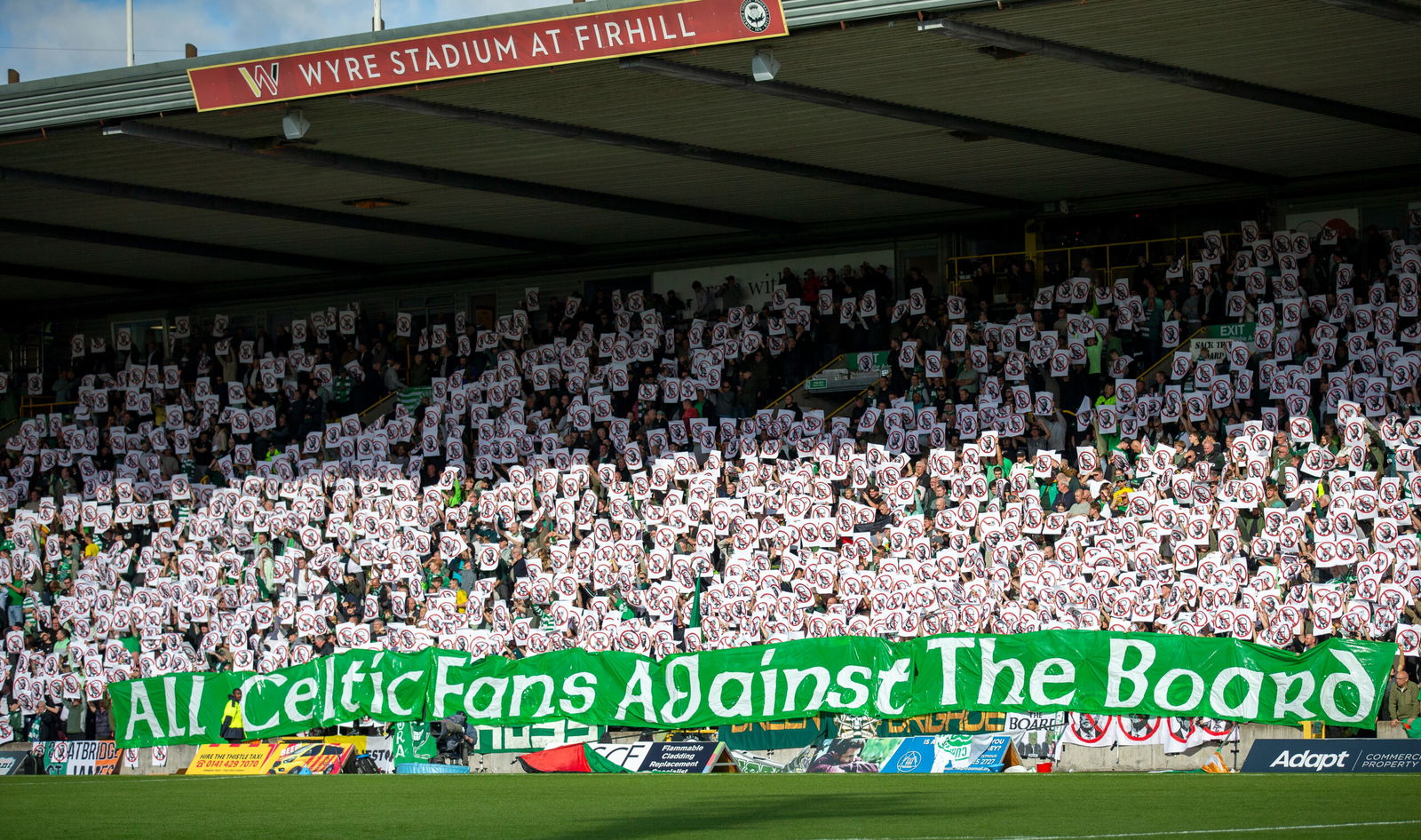
Can the supporters be more helpful than embarrassing the club all over Europe and incur more EUFA fines, really not clever. The Board is going to change over the Summer, will the new Board possess more imagination than the current mob.
And you know all this how?, or just some board aligned wishful thinking?.
A brilliant article which really hits home. I often use the Bodo Glimpt example when countering those who go on about financial disparity etc. As we all know, the Board is full of yes men, the CEO, a company secretary temporarily promoted by Lawwell and told to keep his nose clean. NOTHING will change until Desmond goes whether that is through a buy out or shareholders coming together to match his shareholding ( Celtic Supporters Ltd approach) I fear for us now as the Huns appear to have their act together with strong financial backers
Thanks for the feedback Andy. I’m gonna look at what options we possibly have in some follow up articles. All is far from lost…
No reason why Bodo Glimt haven’t got a top football team . They have no distractions . Only other sport is snow balling . Unlike Glasgow , just when a young man is about to blossom into a top football player , he comes into contract with a young lass , hardly covering her vital parts & he suddenly has other loves & distractions . This doesn’t happen in Bodo as their bits & pieces would frozen .
The other thing people forget the clubs etims mentioned are having their golden period in Europe . Will they achieve any more in Europe than Celtic did , European.winners , runners up 3 yrs later and plenty of semi finals .
I just wonder will they match that
There are so many inconsistencies in this article it’s untrue.
Go for it Daniel. Happy to be corrected.
I spotted a few but none that materially change the argument.
There are probably others but none that I can see that makes a difference to the case and those that concentrate on the minutiae of the undotted i or uncrossed t, don’t wish to engage in a constructive debate.
For my own part, I’ve read similar articles over the past decade outlining our problems and what needs to be done to overcome them.
The trouble is, as fans we don’t seem to have the wherewithal or bravery to take decisive action to overcome the ambition and visionless parasites that block our progress.
When a not insignificant portion of fans seem to be more concerned about graffiti on the wall and tennis balls on the pitch, when a lot of our players couldn’t trap a bag of cement rather than a football then you know it’s a very steep uphill battle.
Thanks for the corrections Cha. I have some follow ups to post onto the site over the coming days. Hopefully stimulate some positive introspection and challenges.
Agree 100%, this team is in freefall due to the board. Last nights football was horrific, no passion, no heart, they looked like a team that had met 5 minutes before kick-off. We really need to spend lots of millions on players that slot right into the team, not young ” for the future players ” that 90% of the time don’t make the grade. We really do need a take over from Desmond,and a clear out of the inept board, that are truly holding Celtic back. HH
Magnificent piece. Magnificent.
Cheers James. One of a few things I’ve been threading over the past few weeks. We’re not doomed yet.
Well, that was a pile of shite.
Moving on we can do no more than the limitations of our league, players and leadership.
The above referenced ‘pile of shite ‘ is indicative and reactive.
Desmond is the elephant in the room: the Irish Trump.
As long as he stays, nothing will change.
If you can do something about that, then there is a chance for the club to have a brighter future.
I see nothing to indicate that this will happen any time soon.
Therefore, we are fucked.
The protests are the reason for the poor results, hun pit was jumping even when they were behind against hearts, parkhead was a library on Thursday when the players really needed support. I was there when we won nothing and sang until I lost my voice because I love Celtic the team
So the whip me whip me kinda attitude then?.
Good piece Monty, reasonably argued.
It will never catch on.
But…
“Power concedes nothing without a demand. It never did and it never will.”
Frederick Douglass
Thanks Steve. I think Power can sometimes be shamed into concession tho. I have a few thoughts on this which I’ll pull together over the next wee while.
I actually went to a game at Bodo back in 1992, I was there with work, a wee tiny but beautiful place
even then you could see that for such a tiny place they didn’t do what the likes of the jags, the spiders etc and go on about history and heritage but how to advance step by step
in 1992 the park and stadium were all indoors, better to protect against the harsh weather conditions, but they said it made the players at the beginning of their careers enjoy the football and learn, then they could cope better with extreme weather conditions as they already had the football knowledge
a bit different to the ash park mentality of the blood and snotters of the smaller Scottish clubs
thanks tony. environment is a factor but Midjytylland and Brugges don’t have the same challenges. I think we just accept the madness of blood and snotters without realising if we lead others will follow suit.
Good read, interesting facts. Yes our youth team model is disappointing, players not developing as playing same level as them. Maybe if we dont win league or do win it hen some major changes hopefully will happen at Celtic park, relying too much on the the Derby games to keep Sky interested in Scottish football
Thanks Robert. That’s a huge part of the problem. We need to think bigger than short term and 4 or 8 domestic fixtures. Short term pain might be the best thing for us.
Great piece, never ever thought that I would say that to a Monti.
Two things:
One, we live next door to a Mammoth that gobbles up young talent who then follows the money trail down south, where cash is King. The Nothern countries are more insular and stick with their own, their mindset is completely different from ours.
Two, Just look at the winter Olympics, it tells you which sports are prioritised. Younger, taller, fitter people who are confident in their own talents, bodies and abilities, their attitude, like their diet is also completely different to ours. Enjoyed your observations.
A well thought out and presented article. Highlighting our deficiencies without being over negative. Pointing out what could be done with a proper plan and strategy [I know!!]
It was interesting that you use the Comfort Zone diagram as Celtic have been hiding in the comfort zone for many, many years – there may even be a subzone for Celtic a super comfort zone.
Brendan has already been through the Fear Zone and into the Learning Zone. Where he discovered that having better players gave you a better chance of winning difficult matches.
Hence the purchase of Engles, Trusty and Idah. Who unsurprisingly contributed to the Champions League victories and prize money.
Meanwhile in the Fear Zone, Michael Nicholson is running around like at madman as the bank balance would be down. So, to get back to the comfort zone it’s sell the likes of Kyogo, Khun and Idah etc and no more signings for you Brendan…
Brendan gets pissed off and leaves, MON steadies the ship, Nancy is found in the WTF Zone [in between the fear and learning], MON steadies the ship.
The fan protests, Not another penny, Collective all have the board back in the Fear Zone trying desperately to get back into the Comfort Zone but realising that will not happen. Meaning we will see no progress until they are gone.
As an aside the SPFL should insist that all clubs have a clear strategy on how they are going to improve from a football point of view, as surely it is in the best interest of the SPFL that their product improves.
Any one of the clubs could embark on a Bodo type journey, if only they could escape the fear of losing out on playing the Glasgow clubs at home. Relatively speaking obviously
Hearts and Sevco may already be in the Learning Zone
Very good article which I was a few paragraphs in and had to scroll back as a I thought Ralph had discovered spell-check. Almost everyone is agreed board change is required however beware the sharks circling. I’d rather be consistently Europa league level than owned by some of the scheisters plying their trade in the EPL.
Absolutely terrific read and really well put together.
I’m really glad you’ve mentioned “hope” and some other positive remarks in your replies to comments as we’re not in a good place just now. IMO Desmond has to be humiliated for what he’s done to us and Lawwell too even though he’s gone. In fact I think, or rather I sense, he’s still pulling strings now. When a control-freak like Lawwell makes appointments it’s ALL about retaining control. Hence, if/when he goes there’s no-one left to run things properly. There’s MN in a nutshell, so far out of his depth he’s drowning. Same can be said for all the other board members, useless.
A complete clear-out absolutely essential. However, we’ve got MON giving his all and we’re out of Europe so we can maybe pull together and win the Title. I think that should be our only focus in the current state of affairs.
With complete and utter respect,without reading any comments….if what i have just read was placed in front of those in charge of Celtic,and still they continued to ignore reality,what the fuck next????? If those in charge care more about 4 matches a season than they do about the club itself…..then fuck them…..bring it all down around them….not the club btw,the pig’s back they ride on.Fuckin charlatans,cunts.
Maybe we could look south too. We could use some goalscoring centre-forwards who know where the sticks are after registering 3 shots on target at home to mid-table Hibs:
West Ham United U21 1-0 RSC Anderlecht U21 | Premier League International Cup Highlights
Daniel Cummings
GOAL | Rocco ‘Rocket’ Vata https://s.w.org/images/core/emoji/15.0.3/svg/1f680.svg | Watford v Fulham | Third Round | Emirates FA Cup 2024-25 Rocco ‘Rocket’ Vata
Failing that we could look within:
SEVEN-Goal Thriller! | Caledonian Braves vs Celtic B | Matchday 22 | Highlights
The Italian Touch Is Coming… 1st goal Sean McArdle
Celtic ‘B’ 3:1 Cumbernauld Colts | Only The Goals 0.30 Sean McArdle who has scored in his last 4 appearances.
Who needs a player trading model anyway. Don’t expect to see the latter start a 1st team game either – it would be stealing Arne’s transfer window minutes. When other clubs can spot our emerging home-reared talent but Celtic can’t you know something is wrong:
Celtic ‘B’ 3 – 1 Clydebank | Saturday, February 21st, 2026 | Match Details (Bankies Archive) Match Report
“Ever get the feeling you’ve been cheated?”
An excellent piece, sobering and insightful these people in charge really do not know their history and it’s going to bite them right in the arse very soon.
E – Tim’s are not discussing the same thing when they are discussing lack of improvement in European Competitions compared to club from Norway , Holland and. Belgium . Because of the Masonic SFA and their employment of referees and VAR officials who are reared in a hate Celtic environment. This means that no matter who Celtic play in SPL , Celtic players have to push themselves to the limit as ref & VAR join together to allow opponent players to push , kick & trip Celtic players at will , yet if a Celtic player goes near opponent in own half , he gets a free kick. This leads to every game a battle and unlike these other clubs mentioned by etims Celtic cannot rest players in any SPL matches . Managers are afraid to play youngsters from academy and so they demand to move . It certainly isn’t easy nor is it any way like what other teams face . Our fans are very quick to turn against own players & manager has to protect players against intimidation
Well, Monty, this is SOME show. I comment a few days ago and it’s immediately ‘hooked’ into “moderation” or some other shit. It’s honest, no ‘cussin’ and, dare I say, relevant. It’s buried.
Historically on here it’s published at the ‘end’, the point where a new post is, er, posted and ALL previous relevant/irrelevant posts are ignored.
SOME CRAIC!